1998
A New School Opens
After receiving its charter, New Century Charter High School opened in August 1998 with a vision for personalized, community-connected education.

About Hawbridge
From a small charter school founded by parents and educators to a K–12 public charter school with two campuses in Saxapahaw, Hawbridge has grown through a shared belief in personal, meaningful, community-connected education.
Each chapter of Hawbridge’s history reflects the people, places, partnerships, and educational ideas that have shaped the school since its founding in 1998.
A shared vision, a new home, and decades of growth shaped the Hawbridge community we know today.
1998
After receiving its charter, New Century Charter High School opened in August 1998 with a vision for personalized, community-connected education.
2003
Dr. Marcia Huth became Director of Education, bringing a vision centered on academic excellence, collaborative community, and arts integration.
2004
The school moved into the restored textile mill beside the Haw River, opening new opportunities for community partnerships, outdoor learning, and interdisciplinary education.
2007
The State Board of Education approved the school’s new name, reflecting its growing connection to the Haw River and the Saxapahaw community.
2021
Hawbridge expanded with a second campus across the road, creating a dedicated Upper School for students in grades 7–12.
Today
Hawbridge serves students from kindergarten through grade 12 across its Lower and Upper School campuses in Saxapahaw.
A shared vision became a new kind of school.
The Hawbridge School began with a group of parents, educators, and community members who believed students deserved a more personalized educational experience. Among those who helped write the original charter proposal were charter school advocate Maureen Joy, parents of homeschooled students, and faculty from the University of North Carolina at Chapel Hill and Duke University.
The charter was awarded in 1998, during the second year of North Carolina’s charter school movement. The school opened that August as New Century Charter High School (NCCHS).
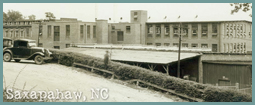
The move to the Haw River helped shape Hawbridge’s future.
After operating in several temporary locations around Chapel Hill, the school found its permanent home in 2004 when it moved into the restored textile mill beside the Haw River in historic Saxapahaw.
The new location placed the school within a distinctive community and landscape, creating opportunities for outdoor education, interdisciplinary study, and partnerships that would become increasingly important to Hawbridge’s educational identity.
As the school grew, its location became increasingly connected to the way students learned.
Working alongside local organizations and community members, Hawbridge faculty developed opportunities in sustainable agriculture, outdoor education, environmental studies, music, languages, theater, textile arts, and interdisciplinary learning.
Experiences on the Haw River, in teaching gardens, and throughout Saxapahaw helped establish the community-connected approach to education that would become an important part of Hawbridge’s identity.
A new name reflected the school’s growing connection to its home.
In 2007, the State Board of Education approved the school’s name change from New Century Charter High School to The Hawbridge School.
The name reflected both the school’s location near the Haw River and the broader educational identity that had developed since the move to Saxapahaw. Environmental studies, ethics, stewardship, the arts, and community-connected learning continued to grow as important parts of the school’s educational program.
Continued growth created a new chapter in Hawbridge’s story.
In 2021, Hawbridge expanded across the road from its longtime home in the Saxapahaw mill with the opening of a second campus.
The original mill campus became home to the Lower School, while the new campus on the hill created a dedicated Upper School for students in grades 7–12. Together, the two campuses allowed Hawbridge to serve students from kindergarten through grade 12 while remaining one connected school community.
Lower School
Grades K–6

Upper School
Grades 7–12
The story continues with every student and every graduating class.
Hawbridge graduates have continued their education at colleges and universities throughout the country, carrying with them the knowledge, independence, relationships, and experiences developed during their years at school.
Today, Hawbridge continues the work begun in 1998 while responding to the needs of new generations of students. Its campuses, programs, and community have grown, but the school’s story remains rooted in the people and place that have shaped it along the way.